
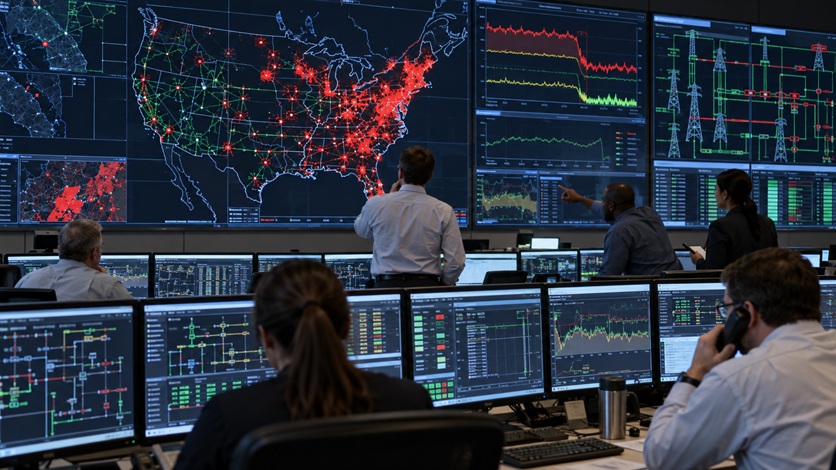
Hospitals, banks, airports, internet networks, data centers, traffic systems, supermarkets, water treatment plants and millions of homes all rely on a power grid that is expected to work every second of every day.
But what happens if a major blackout strikes several states at once — and lasts not for hours, but for days?
That scenario is not a prediction that the entire United States is about to lose power. But federal regulators and grid operators are warning that America’s electric system is under growing pressure from rising demand, extreme weather, cyber threats, aging infrastructure and the rapid expansion of AI data centers. NERC
Why the U.S. Power Grid Matters So Much
The American electric grid is a vast network of power plants, transmission lines, substations, transformers, control centers and distribution networks.
The system is highly interconnected. That allows regions to support one another during periods of high demand, but it also means utilities and regulators must constantly work to prevent local problems from turning into wider outages.
Federal regulators have recently approved new reliability safeguards specifically because the grid faces persistent pressure from cybersecurity threats, severe weather and rising electricity demand. Federal Energy Regulatory Commission
Electricity Demand Is Rising Again
For years, U.S. electricity demand grew relatively slowly.
That is changing.
The North American Electric Reliability Corporation, or NERC, reported that projected summer electricity demand increased by about 11 gigawatts from 2025 to 2026, following a similarly large rise the previous year. NERC
A major reason is the expansion of:
- Artificial intelligence
- Cloud computing
- Data centers
- Advanced manufacturing
- Industrial facilities
- Electrification
The U.S. Department of Energy says the country now has a pressing need for more transmission infrastructure because electricity demand is accelerating faster than it has in decades. The Department of Energy’s Energy.gov
AI Data Centers Are Becoming a Major Power Issue
Artificial intelligence may be digital, but it requires enormous amounts of physical infrastructure.
Large AI data centers can consume extraordinary amounts of electricity.
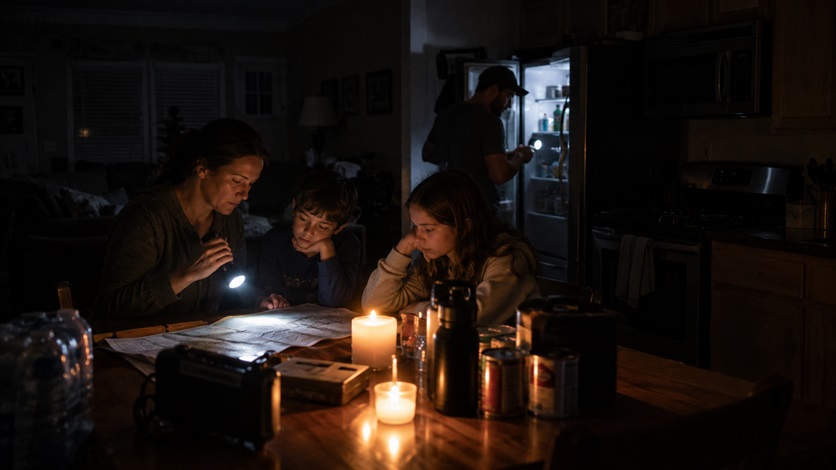
The Department of Energy’s 2026 transmission study notes that some projections put U.S. data-center electricity use at 6.7% to 12% of total national electricity consumption by 2028, depending on how quickly the sector grows. The Department of Energy’s Energy.gov
This does not mean AI will directly cause a blackout.
But rapidly expanding data centers can create challenges when new electricity demand appears faster than generation and transmission infrastructure can be built.
PJM Interconnection, the largest U.S. grid operator, began reviewing proposed large new electricity loads in September 2026 as part of its future demand forecasting process. Reuters
The Grid Needs More Transmission
Producing electricity is only part of the challenge.
Power also has to move from where it is generated to where people need it.
The Department of Energy says additional transmission infrastructure is urgently needed to deal with data-center growth, manufacturing expansion, industrial demand and other new loads. The Department of Energy’s Energy.gov
Building major transmission lines can take years.
Projects often require:
- Regulatory approval
- Environmental reviews
- Land agreements
- Financing
- Construction
- Coordination across states
That means demand can rise faster than grid infrastructure can expand.
Extreme Heat Can Push the Grid Hard
Heat waves are particularly dangerous for electricity systems.
During very hot weather, millions of homes and businesses turn up air conditioning at the same time.
That sharply raises electricity demand.
NERC’s 2026 Summer Reliability Assessment said record additions of solar, batteries and natural-gas generation improved overall readiness, but some regions still faced elevated risks during abnormal conditions such as extreme heat, drought, low wind output and unexpected plant outages. NERC
In 2025, six regions were identified as having elevated risk under abnormal summer conditions.
By 2026, that had fallen to three regions and one locality, showing improvement — but not the elimination of risk. NERC
Severe Storms Can Still Knock Out Power
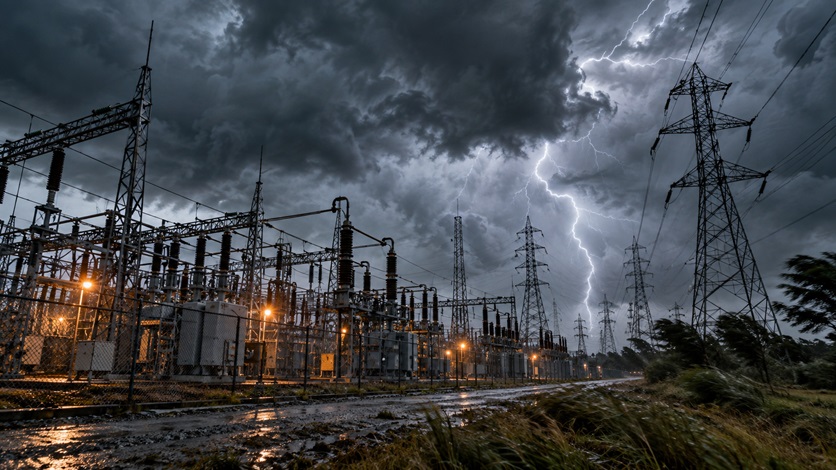
Weather remains one of the most immediate threats to electricity reliability.
In September 2026, a nor’easter along the U.S. East Coast caused power outages affecting more than 100,000 homes and businesses at its peak, while also disrupting flights and transportation. Reuters
Events like this are usually regional rather than national.
But they show how quickly severe weather can disrupt electricity infrastructure.
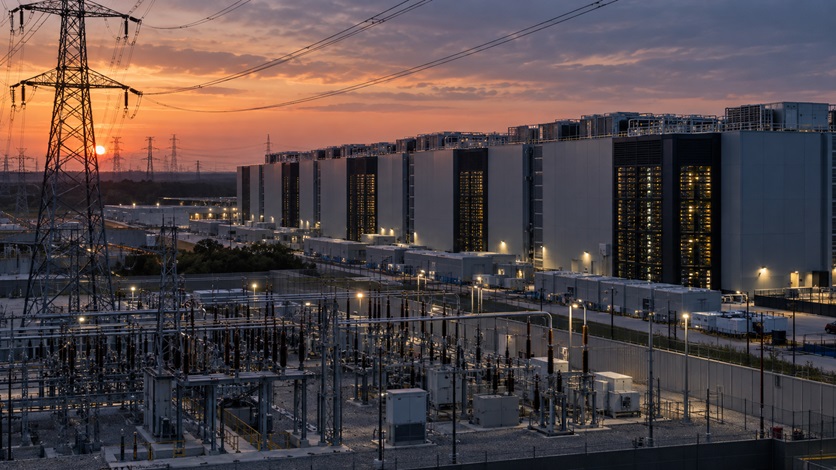
Cyberattacks Are Another Serious Concern
Modern power grids depend heavily on computers.
Utilities use digital systems to:
- Monitor electricity flows
- Control substations
- Manage generation
- Communicate between facilities
- Respond to emergencies
That makes cybersecurity a major reliability issue.
In March 2026, the Federal Energy Regulatory Commission approved new reliability safeguards for the bulk-power system, specifically citing cybersecurity threats, extreme weather and rising demand. Federal Energy Regulatory Commission
A sophisticated cyberattack on critical infrastructure could potentially disrupt operations even if no physical equipment were initially damaged.
What Would a Large Blackout Actually Look Like?
At first, a blackout may simply feel inconvenient.
The lights go out.
Wi-Fi stops working.
Air conditioners shut down.
But if power stays off for many hours or days, the consequences become much more serious.
Mobile Networks Could Begin Failing
Cell towers usually have backup batteries or generators.
But backup systems have limits.
During an extended outage, communication networks could become increasingly unreliable.
That could affect:
- Phone calls
- Mobile internet
- Emergency alerts
- Banking apps
- Business communications
Hospitals Would Rely on Emergency Power
Hospitals maintain backup generators for critical equipment.
But generators need fuel.
A prolonged outage across a large region could create difficulties involving:
- Medical equipment
- Refrigerated medicines
- Emergency departments
- Supply deliveries
- Fuel availability
The longer an outage lasts, the more complicated hospital operations become.
Water Systems Could Be Disrupted
Electricity powers many water pumps and treatment facilities.
A prolonged power failure can therefore affect more than lighting.
It could also disrupt:
- Drinking water distribution
- Sewage treatment
- Pumping stations
- Sanitation services
Food Could Spoil
Supermarkets, restaurants, warehouses and homes rely on refrigeration.
Without power, perishable food begins to spoil.
Long outages could affect:
- Meat
- Dairy products
- Frozen food
- Medicines requiring refrigeration
Supply chains could also slow if warehouses, transportation networks or payment systems are disrupted.
Fuel Stations Could Stop Working
Fuel may still be sitting underground in storage tanks.
But gasoline stations use electricity to pump it.
Without backup power, motorists may not be able to buy fuel.
That could become particularly serious for emergency vehicles, delivery trucks and households relying on generators.
Electronic Payments Could Be Disrupted
Modern economies depend heavily on digital payments.
During a major outage, systems such as:
- Credit-card terminals
- ATMs
- Online banking
- Mobile payments
- Electronic point-of-sale systems
could become unavailable.
Cash could temporarily become much more useful.
Transportation Could Become Chaotic
Traffic signals require electricity.
If large areas lose power, intersections can become more dangerous.
Airports, rail systems and public transportation generally have backup procedures, but a prolonged outage could still cause widespread delays and disruption.
Could the Entire United States Go Dark?
A nationwide coast-to-coast blackout would be an extreme scenario.
The U.S. power system is divided into major interconnections and operated by multiple utilities and grid organizations.
Protection systems are designed to isolate faults before they spread.
So a normal local outage would not automatically cause the entire country to lose electricity.
The more realistic concern is a large regional blackout caused by several problems occurring at the same time.
That could include:
- Extreme weather
- Equipment failures
- Fuel shortages
- Cyber incidents
- Transmission congestion
- Unexpected surges in demand
America Is Not Simply “Running Out of Power”
There is also good news.
NERC reported record additions of new generating resources ahead of summer 2026, including solar, battery storage and natural-gas generation.
Those additions improved reserve margins and reduced the number of regions facing elevated reliability risks. NERC
The challenge is not simply how much electricity America can produce.
The bigger issue is whether power is available:
in the right place, at the right time, through transmission systems capable of delivering it.
The “Ghost Demand” Problem
There is another surprising complication.
Utilities have received enormous numbers of requests from proposed data centers seeking electricity connections.
But some projects may never actually be built.
Reuters reported that proposed U.S. data-center electricity requests had exceeded 700 gigawatts, far more than current actual data-center consumption.
Texas and other states have started tightening requirements because speculative projects can distort grid planning and raise costs. Reuters
This means grid operators face two challenges at once:
They must prepare for rapid growth without overbuilding infrastructure for projects that may never exist.
What Is Being Done to Strengthen the Grid?
Utilities, regulators and government agencies are responding in several ways.
They are working on:
- New transmission lines
- Additional power generation
- Battery storage
- Stronger cybersecurity
- Better demand forecasting
- New reliability standards
- Improved infrastructure planning
The Department of Energy says several major U.S. grid regions are already approving some of the largest transmission investment programs in their history. The Department of Energy’s Energy.gov
What Should Households Do?
Most Americans do not need to prepare for an apocalyptic national blackout.
But basic emergency preparation is sensible.
Households can keep:
- Flashlights
- Spare batteries
- Power banks
- Drinking water
- Non-perishable food
- Essential medicines
- A battery-powered radio
- Emergency contact information
People who depend on electrically powered medical equipment should also have a reliable backup plan developed with healthcare providers and local emergency services.
The Bigger Picture
America’s electricity system is changing faster than it has in decades.
Artificial intelligence is expanding.
Factories are growing.
Electric vehicles are increasing.
More renewable electricity is being added.
Battery storage is expanding.
At the same time, storms, cyber threats and transmission bottlenecks remain serious challenges.
The question is not whether the grid will face pressure.
It already does.
The real question is whether new generation, transmission and security investment can keep pace with rapidly growing demand.
Final Thoughts
A blackout capable of devastating the entire United States is not something experts say is imminent.
But large regional outages are real risks, and the pressures facing the grid are significant.
Electricity demand is rising quickly.
AI data centers are expanding.
Transmission systems need upgrades.
Extreme weather continues to test infrastructure.
Cybersecurity remains a serious concern.
At the same time, America is also adding new generation, batteries and grid infrastructure.
The future therefore depends on one thing above all:
whether the power system can expand and modernize as quickly as the economy’s dependence on electricity is growing.
In an increasingly digital world, keeping the lights on is becoming one of the most important infrastructure challenges of the decade.
The power grid relies on thousands of aging, hand-built transformers. If enough fail, the blackout could last years.