Artificial intelligence is rapidly transforming the transportation industry, and few companies are attracting more attention than Tesla. As competition intensifies in the race toward autonomous vehicles, Tesla’s Full Self-Driving (FSD) technology remains one of the most closely watched developments in the automotive world.
From city streets to highways, AI-powered driving systems are becoming increasingly sophisticated. Tesla believes its Full Self-Driving platform represents a major step toward a future where vehicles can safely navigate roads with minimal human intervention.
The progress of Tesla’s autonomous driving technology is now influencing discussions among regulators, investors, competitors, and consumers worldwide.
What Is Tesla Full Self-Driving?
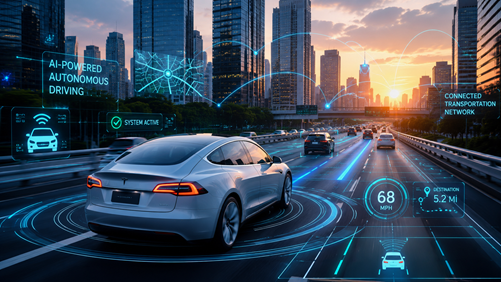
Tesla’s Full Self-Driving system is an advanced driver-assistance technology designed to handle various driving tasks using artificial intelligence, cameras, sensors, and machine-learning algorithms.
The system is capable of assisting with:
- Highway navigation
- Automatic lane changes
- Traffic light recognition
- Parking assistance
- Urban driving navigation
- Driver safety monitoring
Tesla continuously improves the platform through software updates and real-world driving data collected from vehicles already on the road.
Why the Auto Industry Is Watching Tesla Closely
Tesla’s progress extends beyond its own vehicles. The company’s AI-driven approach is influencing the broader automotive sector and accelerating investments in autonomous driving technology.
Many traditional automakers are increasing their spending on:
- Artificial intelligence research
- Autonomous vehicle development
- Advanced driver-assistance systems
- Smart mobility solutions
- Connected transportation technologies
The success or failure of Tesla’s Full Self-Driving efforts could shape industry strategies for years to come.
How Artificial Intelligence Is Transforming Transportation
AI is becoming a critical component of modern transportation systems. Beyond autonomous vehicles, artificial intelligence is helping improve efficiency, safety, and decision-making across the mobility sector.
Smarter Traffic Management
Cities are increasingly using AI-powered systems to monitor traffic patterns and reduce congestion.
Predictive Vehicle Maintenance
Artificial intelligence can identify potential mechanical issues before they become major problems, reducing downtime and maintenance costs.
Improved Driver Assistance
Modern vehicles now use AI to support braking, steering, collision avoidance, and lane-keeping functions.
Connected Mobility Networks
AI helps vehicles communicate with infrastructure, navigation systems, and other vehicles to improve transportation efficiency.
Challenges Facing Autonomous Driving Technology
Despite significant advancements, autonomous driving technology still faces several important challenges.
Regulatory Approval
Governments continue to evaluate how self-driving systems should be tested, monitored, and regulated.
Safety Expectations
AI systems must be capable of handling complex real-world situations involving pedestrians, weather conditions, road construction, and unpredictable driver behavior.
Public Trust
Many consumers remain cautious about fully autonomous vehicles and prefer technologies that still require active human supervision.
Technical Complexity
Driving environments are constantly changing, making autonomous navigation one of the most difficult AI challenges currently being addressed.
The Growing Role of AI in Future Mobility
Industry experts believe artificial intelligence will play an increasingly important role in transportation over the next decade.
Expected developments include:
- More advanced autonomous driving capabilities
- AI-powered public transportation systems
- Smart city transportation networks
- Enhanced vehicle-to-vehicle communication
- Improved traffic optimization technologies
As AI continues to evolve, transportation systems are expected to become safer, more efficient, and more connected.
What This Means for Drivers
For everyday drivers, the growth of AI-powered transportation could lead to several benefits:
- Improved road safety
- Reduced driver fatigue
- Better traffic flow
- Enhanced navigation accuracy
- More convenient travel experiences
However, experts emphasize that human oversight will remain important as autonomous technologies continue to mature.
Conclusion
Tesla’s Full Self-Driving technology has become a major focal point in the ongoing transformation of the transportation industry. As artificial intelligence advances, the company remains at the center of discussions about the future of autonomous mobility.
Whether fully autonomous driving becomes mainstream in the near future or takes longer to achieve, Tesla’s efforts are helping accelerate innovation across the automotive sector and pushing the boundaries of what AI can accomplish on the road.