
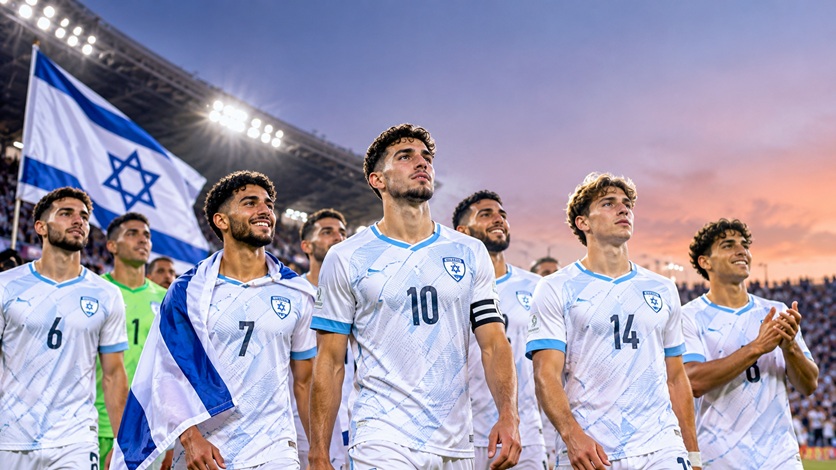
In the summer of 2023, Israel’s Under-20 football team became one of the most unexpected stories in international football.
They were young, talented and successful.
But what made the team particularly significant was not only what happened on the pitch.
Jewish and Arab players were competing together, celebrating together and representing the same national side at a moment when divisions inside Israeli society were already deep.
For a few remarkable weeks, the team appeared to offer a glimpse of what cooperation could look like.
Then, just over four months later, everything changed.
On October 7, 2023, Hamas launched its attack on Israel, killing about 1,200 people and taking 251 hostages. Israel subsequently launched a large-scale military campaign in Gaza, where the war has caused enormous Palestinian loss of life and displacement.
Football suddenly seemed very far away.
Israel’s Young Players Shocked the Football World
Israel arrived at the 2023 FIFA Under-20 World Cup in Argentina without the history or reputation of football’s traditional international powers.
The country’s senior men’s team had qualified for the World Cup only once.
Expectations were therefore relatively modest.
But the young team kept winning.
Their biggest moment came against Brazil.
Israel defeated the five-time senior world champions 3-2 after extra time in the quarter-finals, producing one of the biggest surprises of the tournament.
Suddenly, people across Israel were paying attention.
Five days later, the semi-final against Uruguay reportedly attracted a 23% television audience share in Israel, making it the most-watched programme of the evening.
The country had fallen in love with the team.
It Was More Than Football
The team’s importance went beyond results.
Its squad reflected some of the complicated identities within Israeli society.
Among the players were Jewish and Arab Israelis, including Muslim players such as Anan Khalaili and Hamza Shibli.
During the tournament, coach Ofir Haim stressed that different religions inside the dressing room were not treated as a source of division.
Some players practised Jewish religious traditions.
Others performed Muslim prayers.
But on the pitch, they were teammates.
That made the team’s success particularly powerful.
At a time when Israeli society was dealing with political tension and longstanding divisions between Jewish and Arab communities, the Under-20 side appeared to show a different possibility.
Anan Khalaili Became a Symbol of the Moment
One of the most memorable figures in the team was Anan Khalaili.
The Israeli Arab forward scored an injury-time winner against Uzbekistan in the round of 16.
After the match, he thanked supporters watching back home.
During the interview, he used the Hebrew expression “Am Yisrael,” meaning “People of Israel”, a phrase closely connected with Jewish communal identity.
For observers such as Israeli journalist Ido Rakovsky, the moment illustrated something unusual about the team: Arab and Jewish players were not simply sharing a dressing room; they were building a common football identity.
Then Israel Beat Brazil
The quarter-final against Brazil transformed the team from a promising youth side into a national sensation.
Brazil had the history.
Brazil had the reputation.
Israel had belief.
Goals from Khalaili and Hamza Shibli helped produce the extraordinary 3-2 victory.
It was the type of result that supporters remembered far beyond the tournament.
For some, the players represented a possible future in which communities that often experienced tension away from football could cooperate successfully.
The Journey Ended, But the Hope Remained
Israel eventually lost 1-0 to Uruguay, who went on to win the tournament.
But Israel still finished third at the 2023 Under-20 World Cup, an exceptional achievement for the country.
The result also appeared to confirm that the team’s success was not accidental.
Many members of the group had previously reached the final of the 2022 European Under-19 Championship, losing to England after extra time.
There was growing belief that Israel might have produced a genuine golden generation.
Players from that group began attracting interest from clubs across Europe and beyond.
The future appeared unusually bright.
Four Months Later, October 7 Changed Everything
Then came October 7.
Hamas-led militants attacked southern Israel, killing about 1,200 people and abducting 251 hostages, according to figures cited in reporting on the conflict.
Israel responded with a major military campaign in Gaza.
The resulting war has killed tens of thousands of Palestinians, displaced large parts of Gaza’s population and produced a humanitarian catastrophe that has dominated international politics ever since. The United Nations figure cited in September 2026 reporting put the Palestinian death toll above 70,000.
The environment in which the young football team had represented cooperation suddenly looked very different.
Football Could Not Escape the Conflict
Sport is often described as separate from politics.
In practice, that separation can be difficult.
The conflict affected players, supporters and communities directly.
Questions of national identity became increasingly sensitive.
Arab Israelis faced particular pressures.
Some were questioned over how they expressed grief, sympathy or political views.
Meanwhile, Israeli football was operating in a country dealing with war, hostage trauma, military mobilisation and intense political division.
The simple image of Jewish and Muslim teammates celebrating together now carried far greater meaning.
Racism Had Already Been a Problem
The idea that football had solved social tensions would have been unrealistic even before the war.
Racism had existed within Israeli football for years.
The most notorious examples were associated with sections of Beitar Jerusalem’s support.
In 2013, extremists protested against the signing of two Muslim players from Chechnya, and the club’s offices were later set on fire.
Anti-Arab chants have also been documented in Israeli football.
Those realities showed the limitations of viewing one successful youth team as proof that deeper social divisions had disappeared.
But that did not make the Under-20 team’s example meaningless.
If anything, it made it more striking.
Can Football Really Bring People Together?
Former Israel international Beram Kayal has argued that football can create relationships that might otherwise never develop.
Kayal, an Arab Israeli and Muslim, played for years alongside Jewish teammate Tomer Hemed.
He has described their relationship in simple terms: teammates first, differences second.
Kayal later worked with Israel’s football authorities to support young players from Palestinian communities and has spoken about wanting Arab players to feel comfortable expressing their language and identity inside the national setup.
His experience illustrates both the possibilities and the limitations of football.
The sport cannot end a political conflict.
It cannot erase discrimination.
And it cannot repair the damage of war.
But it can create spaces where people who might rarely meet elsewhere learn to depend on one another.
A Golden Generation Still Developing
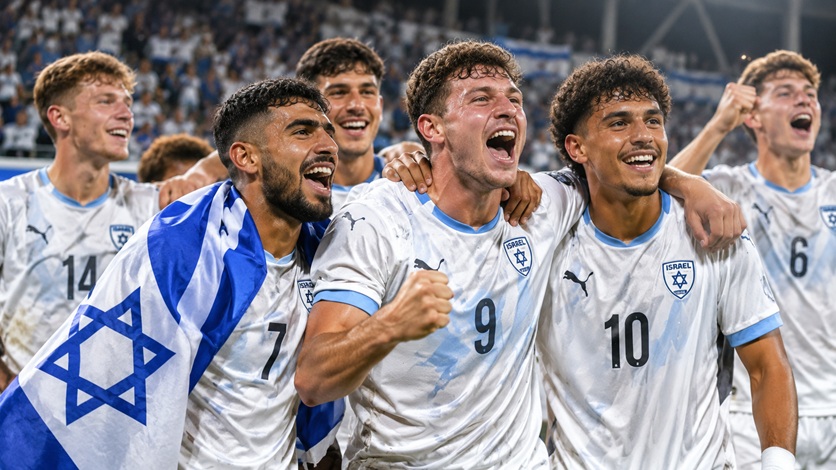
Many players from the 2023 Under-20 side have continued progressing professionally.
Several have moved into senior international football, while others have secured opportunities abroad.
Their development has renewed hopes that Israel could eventually produce a senior national team capable of qualifying regularly for major tournaments.
But converting youth success into senior success is never guaranteed.
Football history is full of excellent youth teams whose players never achieved the same results at senior level.
For this generation, there is another complication.
Their careers are developing against the background of one of the most traumatic periods in the region’s recent history.
What That Team Represented
For a brief period in 2023, the Under-20 team provided something much bigger than a football result.
Jewish players celebrated with Muslim teammates.
Arab players scored historic goals for Israel.
Supporters from different backgrounds watched the same matches.
The team offered an image of cooperation at a time when many people doubted whether such cooperation was possible.
Historian Omer Einav later reflected that the victory over Brazil had seemed to represent a future built around cooperation and shared success.
But he also acknowledged how dramatically the world surrounding that team changed after October 7.
Football Cannot Solve Everything
There is a danger in placing too much responsibility on sport.
A football team cannot resolve questions of territory, security, discrimination, national identity or competing historical claims.
It cannot bring back those killed in Israel.
It cannot undo the destruction and loss of life in Gaza.
It cannot substitute for political decisions.
But football can sometimes reveal something important about ordinary human relationships.
People can belong to different religions and communities while still sharing goals.
They can depend on one another.
They can celebrate together.
And sometimes those small examples matter precisely because the world outside the stadium is so divided.
The Question That Remains
The question now is not simply whether this generation can qualify for a World Cup.
It is whether the spirit associated with that team can survive everything that has happened since 2023.
Before October 7, their story seemed straightforward.
A talented young football team had exceeded expectations and temporarily united supporters.
After October 7 and the war that followed, the story became much more complicated.
The same photographs of Jewish and Arab teammates celebrating together now carry another meaning.
They represent a moment from a world that changed only months later.
Final Thoughts
Israel’s 2023 Under-20 team achieved something remarkable.
They defeated Brazil.
They finished third in the World Cup.
They produced players capable of competing at a higher level.
But their most important legacy may not ultimately be measured in goals or tournament results.
For a few weeks, they offered a glimpse of cooperation between people from backgrounds often portrayed only through conflict.
Then came October 7.
The Hamas attack on Israel and Israel’s subsequent war in Gaza transformed the political and human landscape surrounding those players.
The divisions became deeper.
The consequences became devastating.
Football could not stop any of it.
But the memory of that team remains powerful because it showed, however briefly, that another type of relationship was possible.
Whether that spirit can survive — and whether this football generation can still fulfil its promise — remains an open question.
Can the potential of a golden generation of Israel’s footballers, in sport and society, be realised?